June 24, 2026
AI cut MRI wait times up to 60%
At Kaiser Permanente, clear rules and strong leadership made shorter MRI waits possible.
More people, an aging population, and medical advances have all increased the need for MRI scans in the United States. Doctors use detailed images from MRI scans to help diagnose problems and guide care. But MRI machines are limited and adding new ones is costly.
That mismatch can mean longer waits for patients who need answers. Delayed testing and results can create unnecessary uncertainty and fear, and can slow the next step in care.
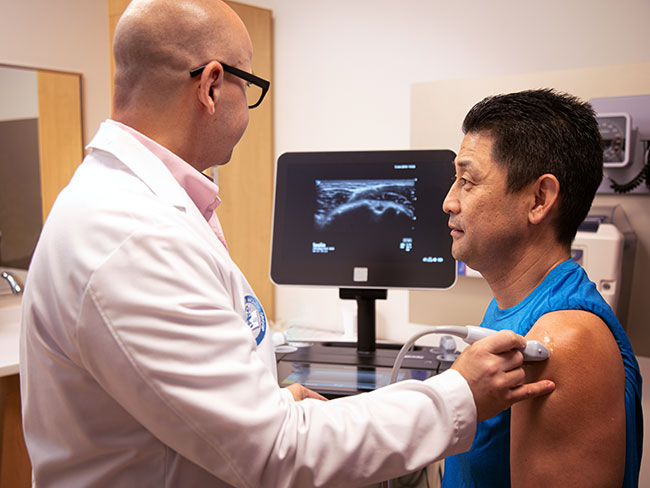
In Kaiser Permanente’s Northwest region, an FDA-cleared artificial intelligence tool is helping speed up MRI scans while preserving the image quality radiologists need to guide care. By reducing image noise, the tool shortened the length of MRI scans from about 45 minutes to about 30.
A shorter scan time increased the number of scans that could be scheduled with existing equipment. It helped reduce the time patients wait for MRIs by up to 60%.
That is exciting and real progress. But the technology is only part of the story.
The governance, or the process for how the tool was chosen and deployed, matters just as much.
Governance turns promise into practice
Good governance gives health care leaders a clear way to evaluate promising tools before they reach patients. It helps inform whether a tool should move forward and what safeguards are needed.
That doesn’t mean starting from scratch. Health care organizations already have ways to review new technology for quality, safety, privacy, security, legal requirements, technology fit, and clinical fit.
AI governance builds on that base. It adds the AI-specific review needed to understand how a tool works, where it fits, and what risks to manage.
AI councils help anchor governance at Kaiser Permanente
At Kaiser Permanente, our AI councils anchor our AI governance. These groups review proposed AI uses before they move forward. The councils are organized around 3 major areas of the organization: care delivery, health plan functions, and business functions and IT.
The councils help make sure tools support our organization’s goals and responsible AI principles. They also help leaders see the connection between AI investments and improved outcomes.
Once a council reviews a tool and gives it the go-ahead, more detailed reviews can follow. Those reviews cover areas like legal, privacy, security, clinical, workforce, and responsible AI. The council helps line up these reviews and makes sure they happen at the right time.
How a tool moves forward
The councils’ review process starts with an idea.
- Does AI make sense for the problem?
- Do the likely benefits outweigh the risks?
If the answers are yes, the idea can move into a more detailed proposal.
A proposal defines the business need, the technology approach, the expected value, and the safeguards needed before launch. It also looks at the impact on patients, members, clinicians, and workflows.
The process is structured, but it’s not one-size-fits-all. Lower-risk tools, such as those supporting back-office functions, may move faster. Higher-risk tools need deeper review. That helps Kaiser Permanente move with speed when it can and with caution when it should.
For the AI tool that speeds up MRI scans, the need was clear. Demand for MRI services was high. Machine capacity was limited. The tool could reduce scan time while maintaining image quality.
But need alone is not enough. The tool also had to work for the people using it. That meant earning the confidence of the radiologists who read the images and sign the final report. Faster scans could not come at the expense of clinical quality.
Before launch, the tool had to be configured for our clinical setting. It also needed to be tested for safety and effectiveness, and reviewed to make sure it was ready for widespread use. The accountable leader then made the final decision about whether the tool should move forward.
Governance does not end at launch
AI tools need continued oversight after they reach the care delivery environment. AI tools need to be checked over time because care settings, workflows, and technology can change.
Kaiser Permanente continues to monitor whether a tool is working as intended. For the AI tool used for MRIs, that includes watching measures such as scan time, image quality, appointment availability, repeat scan requests, and impact on radiologist workflow.
This process helps make good decisions repeatable. This way useful tools move forward, risky tools are stopped, and patients and clinicians continue to benefit from innovation.
Policy should support good governance
Strong oversight matters. Rules should support the work health care organizations already do to evaluate quality, safety, privacy, security, technology, legal requirements, and clinical fit.
Policymakers can help by advancing frameworks that:
- Match oversight to risk — Higher-risk tools warrant higher scrutiny.
- Support clinical trials and independent testing — Policymakers should support large-scale clinical trials and independent quality assurance testing to demonstrate AI’s safety and effectiveness for health care settings.
- Promote consistency in regulations — Fragmented or conflicting requirements can slow adoption without making patients safer.
At Kaiser Permanente, AI helped shorten scan times, open more appointments, and improve access to care.
The technology made the gains possible. The governance process made sure it was safe and ready for patients.
That’s the kind of responsible use policy should support.